Podcast
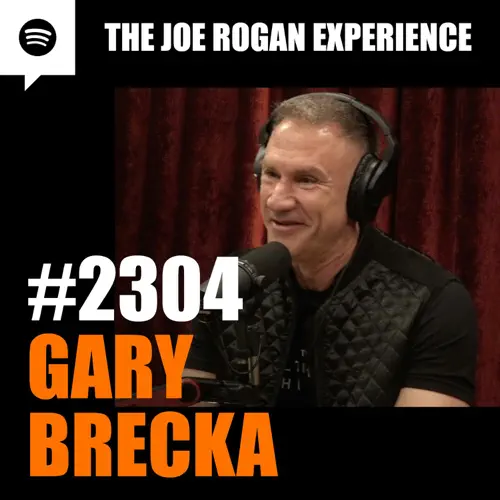
The Joe Rogan Experience
Gary Brecka
2h 47m
Detailed summary
Why do people develop chronic illness, low energy, and declining physical function despite enormous healthcare spending? Brecka approaches this question through nutrition, metabolic health, environmental exposures, and lifestyle. Rogan contributes examples from strength training, recovery, and injury management. The conversation will interest listeners exploring longevity and health optimization, although it combines practical habits with broader medical claims and personal testimonials that the discussion itself does not establish.
Key takeaways
Look beyond a single biomarker. Brecka emphasizes blood pressure, abdominal obesity, glucose, insulin, triglycerides, and inflammation when discussing metabolic health and cardiovascular risk.
Connection belongs in the longevity conversation. Purpose, community, outdoor activity, and continued participation in family life are recurring themes.
Train for usable strength. Carries, hanging, balanced movement, and controlled repetitions feature prominently in Rogan’s approach to maintaining physical capacity.
Recovery depends on context. They discuss separating cold immersion from strength workouts and avoiding the form breakdown that comes with excessive fatigue.
Deficiency correction anchors Brecka’s framework. He advocates testing and targeted supplementation, while also promoting hydrogen water, red light, and oxygen therapies.
Summary
1. Food processing, chronic disease, and healthcare incentives
Brecka opens by supporting Robert F. Kennedy Jr.’s health agenda and criticizing financial incentives surrounding chronic disease. He argues that food manufacturing, industry-funded research, and regulatory practices can undermine prevention.
His central food argument concerns the processing between farm and table. He singles out refined seed oils and describes repeated exposure to contaminants as a cumulative burden. Rogan asks whether alternatives such as olive oil, avocado oil, and beef tallow could realistically replace existing products.
Brecka presents local farming as economically viable, using Florida’s Seed to Table operation as an example of produce reaching shelves shortly after harvest.
2. Purpose, community, and voluntary physical challenge
Discussing Blue Zones, Brecka emphasizes whole foods, purpose, community, and activity into old age. He argues that isolation can coexist with constant digital communication, leaving people socially disconnected despite appearing connected.
Both speakers describe time outdoors as restorative. Brecka contrasts his expensive recovery equipment with the benefits he experiences from hiking with a weighted backpack.
Their broader philosophy is that pursuing comfort can accelerate physical decline. Exercise and manageable challenges provide opportunities to preserve capacity. Brecka’s account of accompanying his son through seven marathons illustrates their enthusiasm for resilience, though this extreme experience is presented as a personal story.
3. Metabolic health and proposed environmental triggers
Brecka challenges the emphasis on LDL cholesterol alone, arguing for a wider assessment that includes triglycerides, blood sugar, insulin resistance, blood pressure, and inflammatory markers. He questions statin benefits and draws on observations from his previous mortality research.
He also recounts his family’s testing for environmental exposures and his daughter’s experience with suspected mold-related symptoms. He proposes investigating mold, heavy metals, viruses, and parasites as possible contributors to autoimmune conditions.
These sections contain some of the episode’s broadest medical assertions. The conversation presents Brecka’s explanations and anecdotes without systematically testing competing explanations or establishing his claims about treatment outcomes.
4. Strength, conditioning, and recovery practices
Rogan describes training around kettlebells, bodyweight exercises, loaded carries, and grip work. His preferred strength approach uses repetitions below failure with long rests, treating strength as a skill that benefits from consistent technique.
He explains how repetitive archery contributed to back problems and how balancing the opposite movement, adding rotation, and stopping when form deteriorated helped.
For conditioning, he discusses bag work and Tabata intervals. Both speakers favor moving cold immersion away from the immediate post-lifting period because of concerns about muscle growth. Sauna, stretching, and sleep also feature in their recovery discussion.
5. Nutrients, methylation, and recovery technologies
Brecka links some problems with mood, anxiety, and sleep to nutrient availability and neurotransmitter metabolism. He discusses methylation-related genes, B vitamins, methylfolate, magnesium, and trimethylglycine, citing improvements he says he observed in clinic patients.
He favors essential amino acids and discusses creatine, omega-3s, and vitamin D. Hydrogen water receives extensive attention, alongside red light and hyperbaric chambers.
His closing routine combines water, sea salt, hydrogen, and amino acids, followed by vitamins with food. Throughout, he presents these interventions as ways to supply missing inputs or improve recovery.
Timestamped topics
00:00:01 | Healthcare incentives, MAHA, food policy, and Brecka’s objections to refined seed oils. |
00:15:38 | Blue Zones, purpose, community, social isolation, and the restorative experience of nature. |
00:26:39 | Hydrogen water and baths, proposed mechanisms, research references, and personal recovery stories. |
01:01:29 | Cholesterol, metabolic risk, environmental testing, and proposed triggers of autoimmune disease. |
01:27:06 | Physical resilience, voluntary discomfort, endurance stories, carries, grip strength, and training balance. |
01:53:39 | EMF shielding, hyperbaric chambers, oxygen therapies, cold immersion, sauna, and conditioning. |
02:18:49 | Creatine, amino acids, magnesium, methylation, mental health, and Brecka’s morning supplement routine. |
Methods, practices, and resources mentioned
Tabata intervals: Rogan describes eight rounds of 20 seconds of effort followed by 10 seconds of rest.
StrongFirst approach: Kettlebell training associated with Pavel Tsatsouline, using submaximal sets, substantial rest, and careful technique.
Functional strength practices: Rucking, farmer’s carries, single-arm suitcase carries, dead hangs, and rotational exercises.
Testing framework: Blood count, metabolic panel, lipids, hormones, nutrient status, and methylation-related genetic testing.
Recovery technologies: Hydrogen water and baths, red light therapy, hyperbaric chambers, and exercise with oxygen therapy.
Resources: The Ultimate Human, Peter Attia’s centenarian decathlon concept, and a David Goggins book whose title is unspecified.
Turn long podcasts into useful notes with Ronix
Keep the ideas worth revisiting. Import a podcast file or URL into Ronix to generate a transcript and structured summary. Save the discussion alongside your notes, revisit specific passages, and build a searchable collection of insights from the episodes you listen to.
Want to explore the source in detail? Download Ronix, then import a supported source URL or an audio or video file to generate your own transcript on your Mac.
The Joe Rogan Experience #2304 — Gary Brecka
An independent summary by Ronix. Source material and artwork belong to their respective creators.
